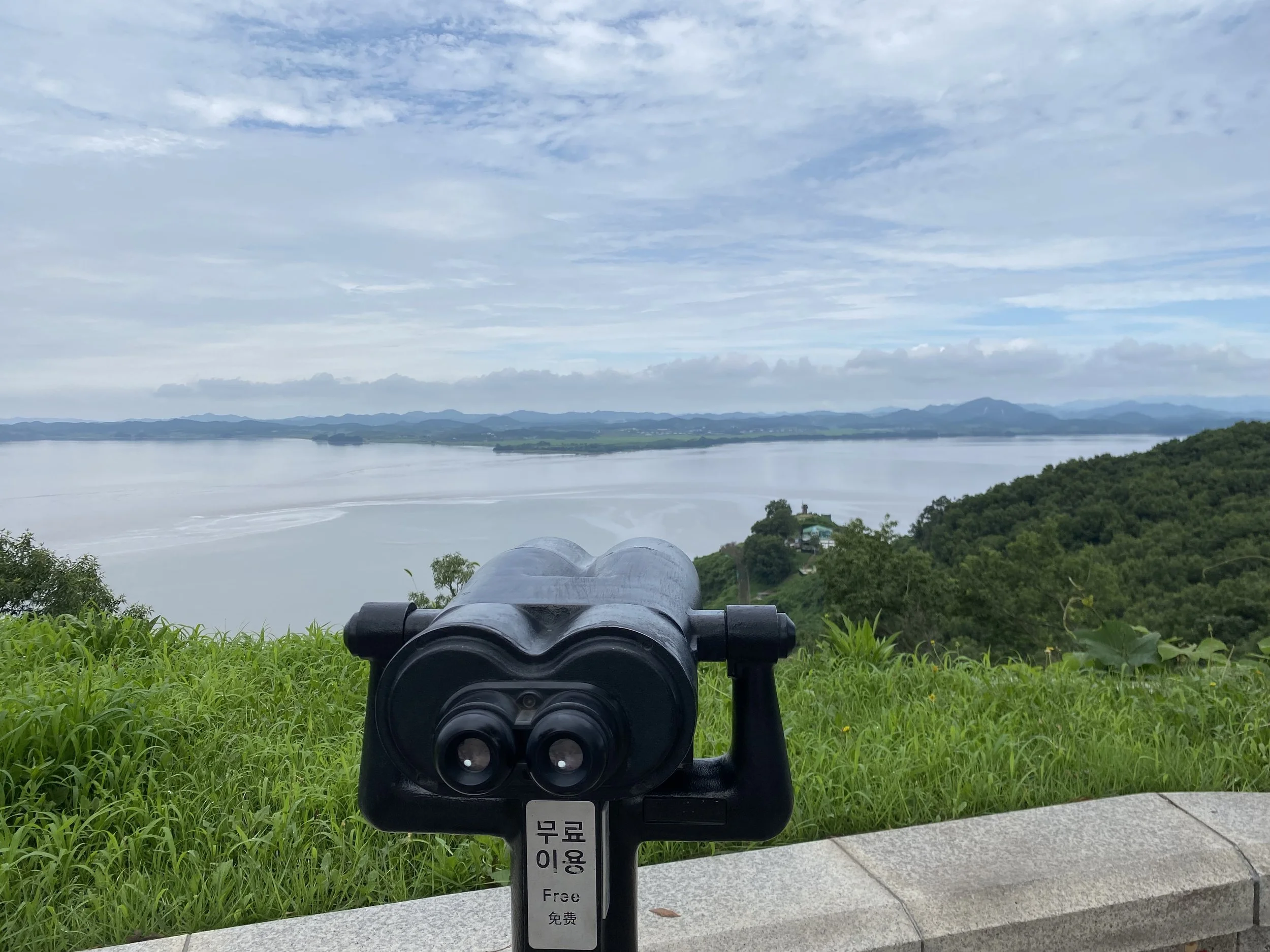
Art at the DMZ. ‘A Collective Prayer’
I’m participating in an exhibition in the Odusan Unification Observatory. Every time I drive to my studio, I pass this building, which is perched on the top of a hill overlooking the DMZ, with a clear view of North Korea across the Han Estuary. But I’ve never bothered to drive up there, so when I was invited to participate in the exhibition the ‘73 Project: A Collective Prayer, Divided Time, Connected Future, which was to be held there, I decided to visit.
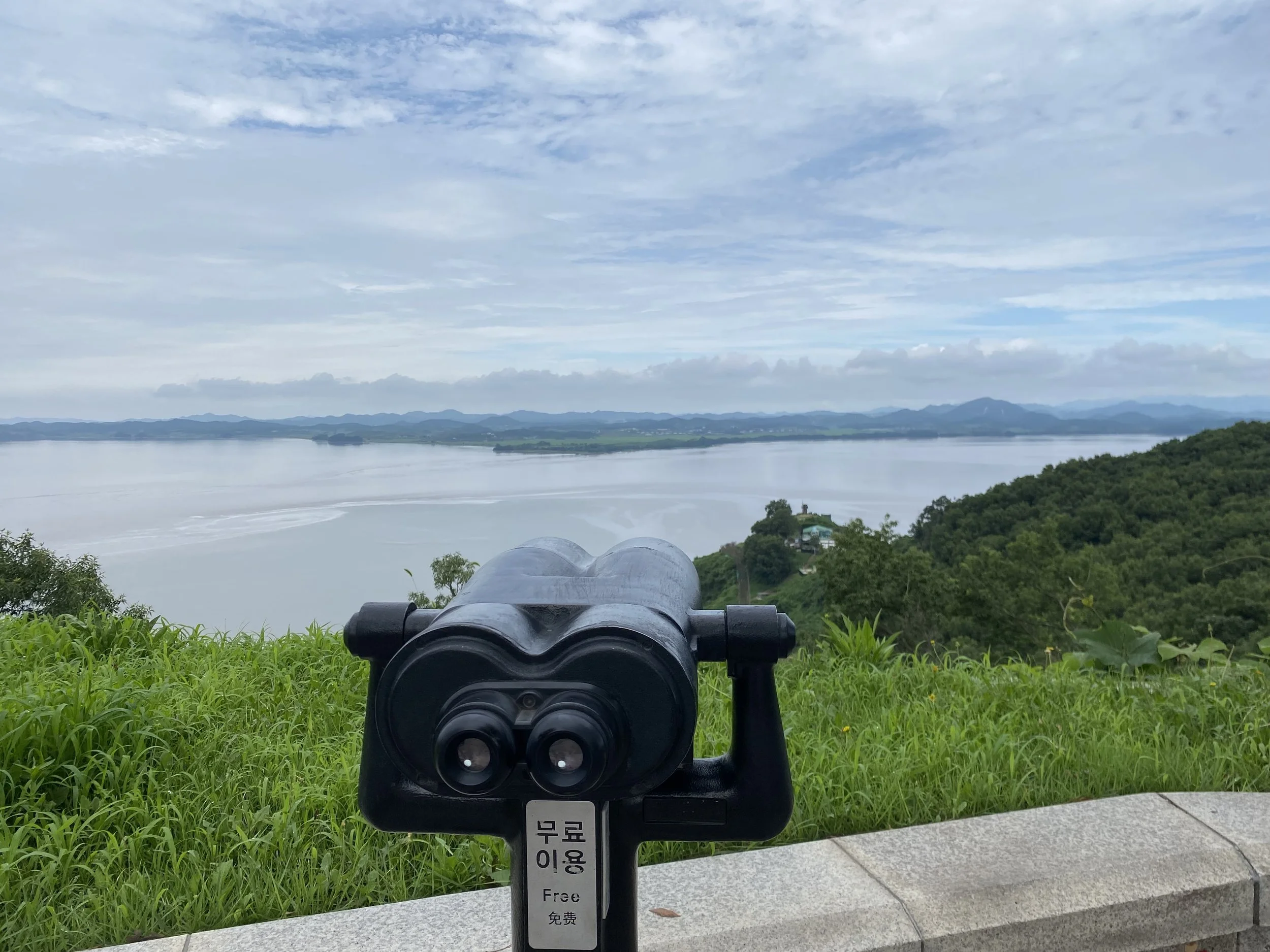
North Korea, about 2 km away across the Han Estuary, as seen from the Odusan Unification Observatory.
I’m currently participating in an exhibition in the Odusan Unification Observatory. Every time I drive to my studio in Paju Book City, I pass this building, which is perched on the top of a hill overlooking the DMZ, with a clear view of North Korea across the Han Estuary. But I’ve never bothered to drive up there, so when I was invited to participate in the exhibition the ‘73 Project: A Collective Prayer, Divided Time, Connected Future’, curated by Joonman Cha, I finally visited.
The Odusan Unification Observatory is positioned at a point where the two Koreas are so close that with the aid of a telescope you can clearly see buildings and people moving around just over two kilometers away across the estuary. It’s very uncanny, like getting to see a parallel universe, one that’s very like our own but also shockingly different. I had a similar experience when I visited another Observatory, further to the northwest [See: my blog entry ‘A View from the North’, October 10, 2023]
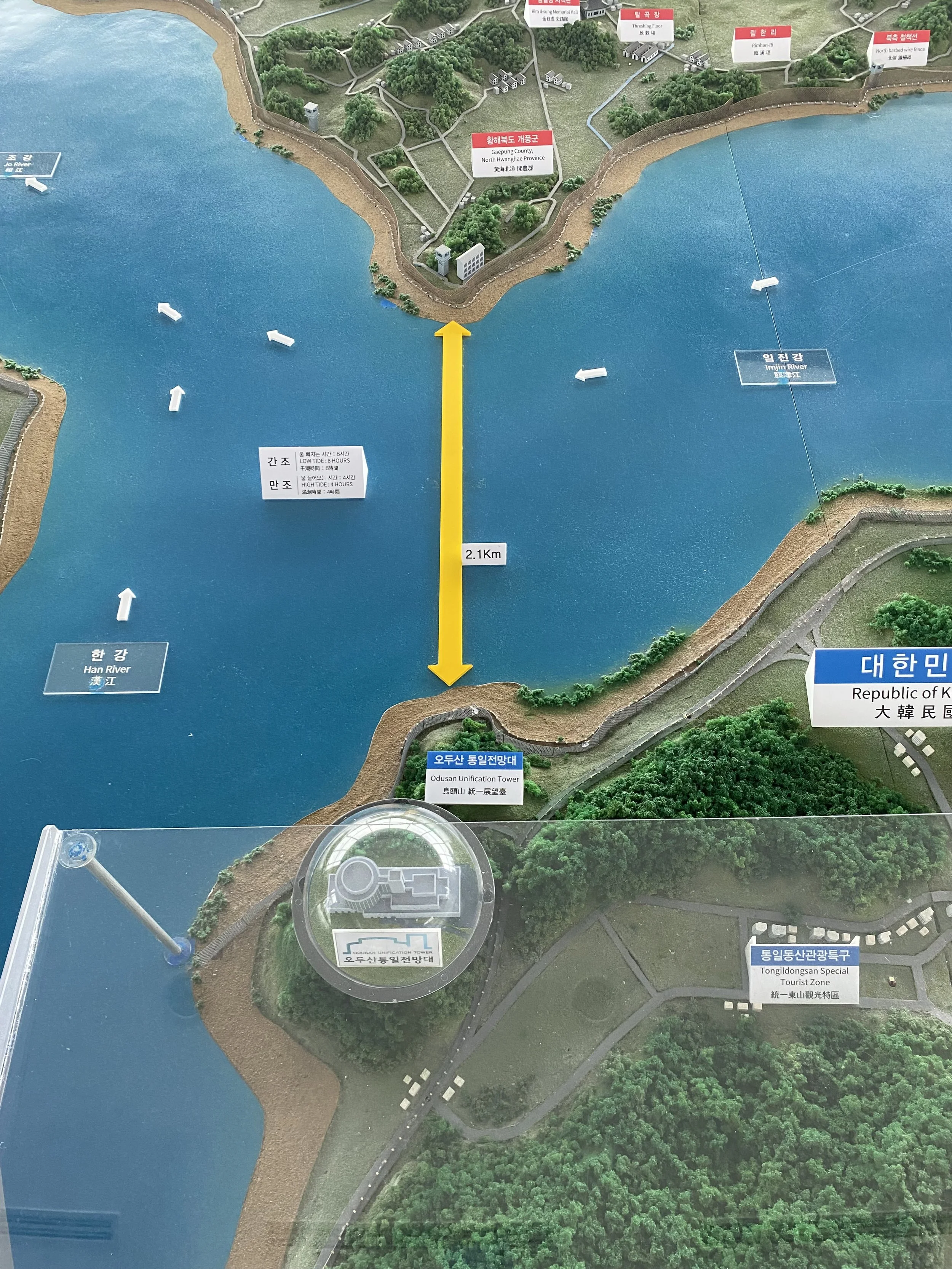
A model in the Observatory showing how close the two Koreas are at this point.
An especially moving permanent exhibit within the Unification Observatory is a display entitled ‘Photography Exhibition of the Divided Families’. There are poems, letters, and photographs, which, as the information board puts it, ‘express the longing for separated family members...It also expresses our fervent desire that the Korean nation will be united so that those families can learn about the fate of their relatives.”
I was visiting with my wife, whose father was North Korean. After fleeing North Korea just before the war broke out, he never saw any of his family again. The division wasn’t only between him and the family from whom he was physically cut off, but also within his own self.
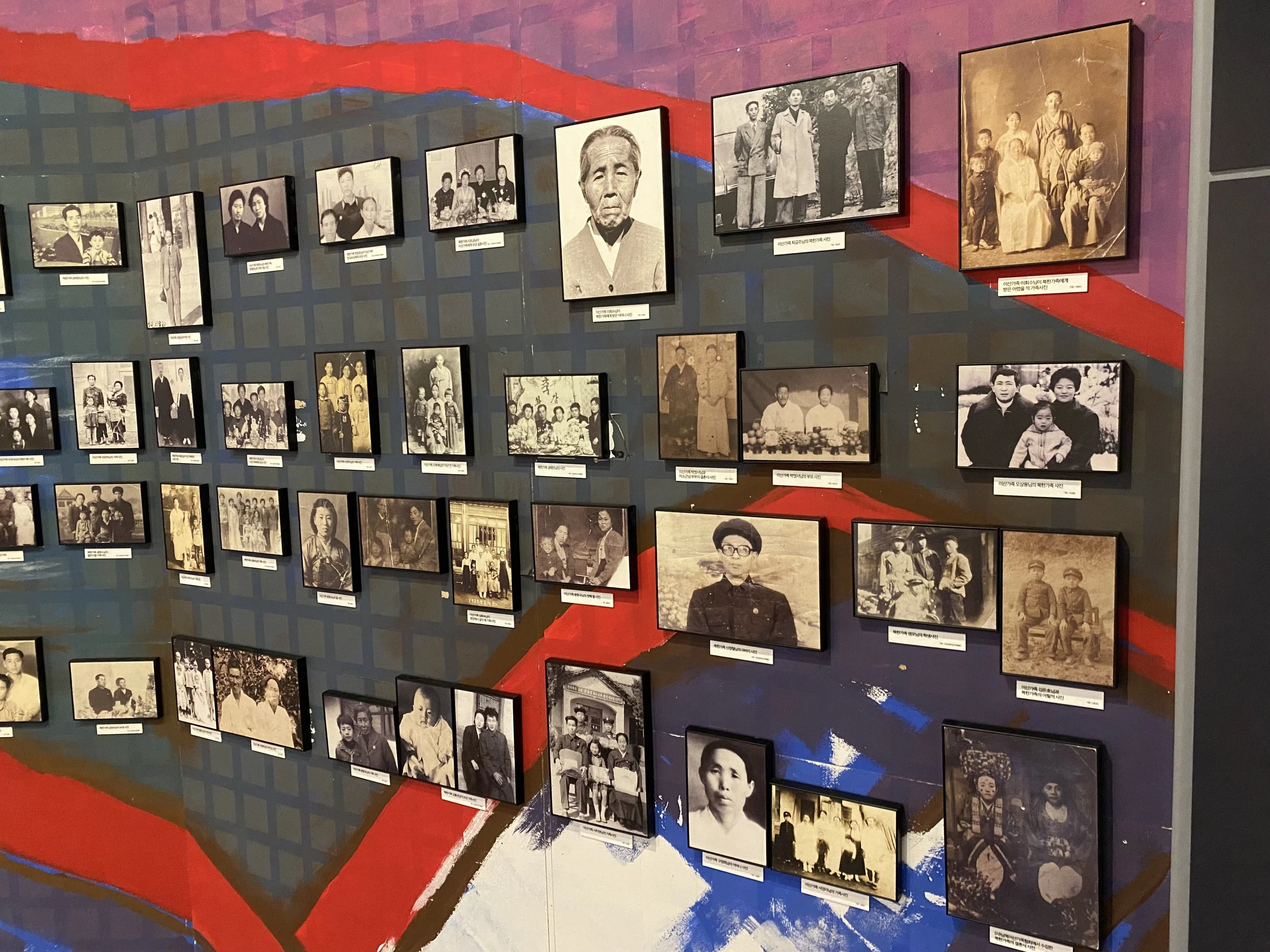
Part of the display entitled ‘Photography Exhibition of the Divided Families.’
Recently, the North Korean leadership under Kim Jong-eun has abandoned the rhetoric of re-unification. I think the leadership must have realized that if unification does happen they certainly won’t be around to see it because they’ll have been strung up from lampposts or be very unhappily on trial for crimes against humanity.
*
Of the goals of the current exhibition, ‘73 Project: A Collective Prayer. Divided Time, Connected Future’, which was held within a gallery space inside the Observatory, in the catalogue the curator writes : “more than an exhibition venue, it [the Odusan Unification Observatory] is a place where one confronts the painful paradox of being able to see, yet not reach, the other side. Within this powerful setting, artistic reflection and historical reality converge, inviting visitors not only to appreciate works of art but also to contemplate the meaning of division, reconciliation, and peace.’
Today, the hopes for a united Korean peninsula which the Observatory represents are an even more idealistic aspiration than they were a decade ago when the Observatory was built. Now that diplomacy has seriously stalled, ‘prayer’ is definitely the right word to use in relation to this goal.
In the exhibition there were 73 artists involved, from 12 different countries. Most of the artists were Korean, but there were also works by artists from Germany, the UK, the USA, China, Japan, India, France, and other countries. As a strange expedient, rather than shipping the original paintings from these different countries, at what would be great expense, the works were digitally printed on canvas here in Korea! This was a first for me. So my painting, which I’ve already illustrated in a previous blog entry, in reality is 120 x 160cm, but for the exhibition it was reduced to about a quarter of the actual size. Here, I show both the original painting and the digital print on canvas as displayed in the exhibition:
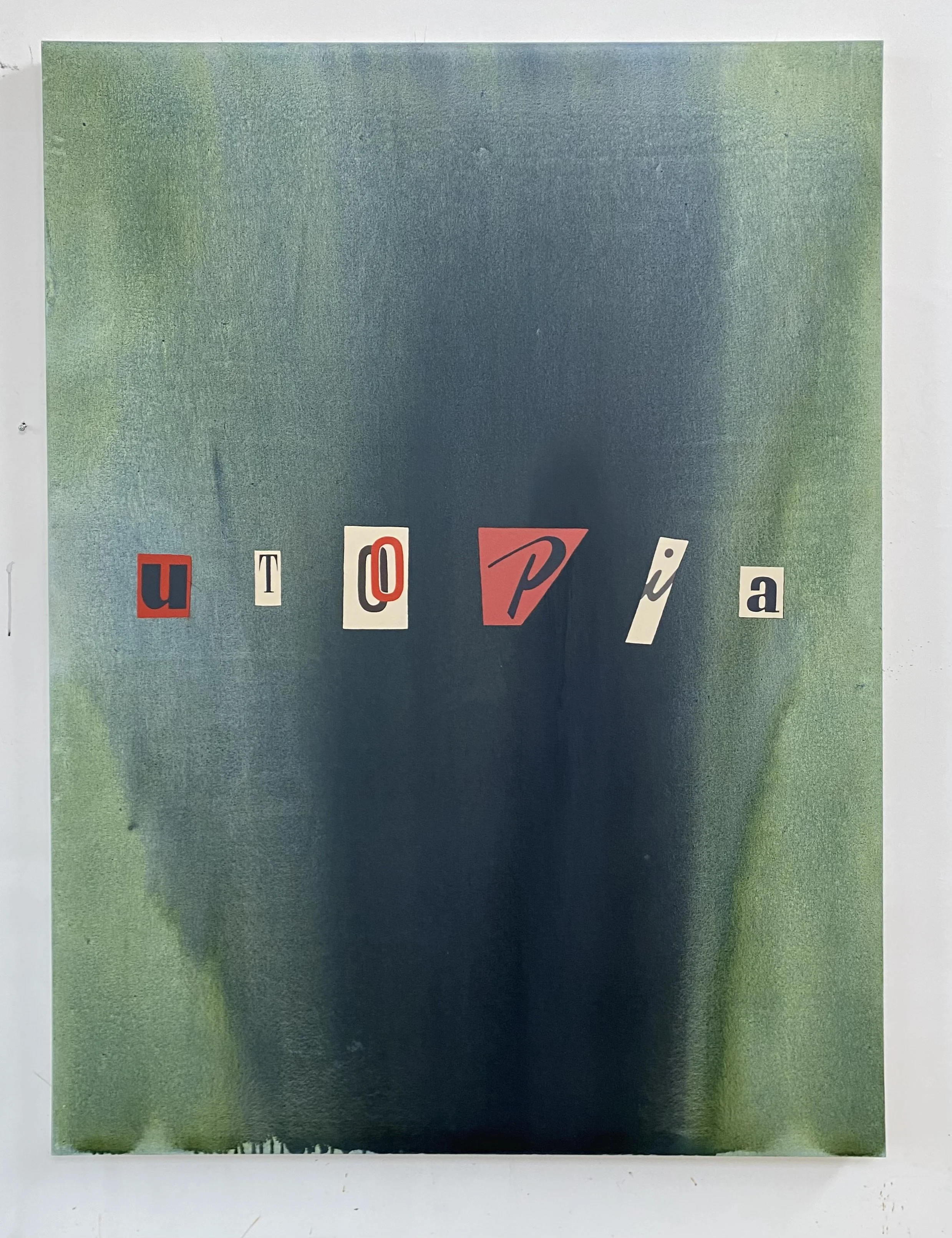
My original painting entitled ‘Picturegoer Weekly’, October 21st, 1950. 2025. Acrylic on canvas. 120×160cm
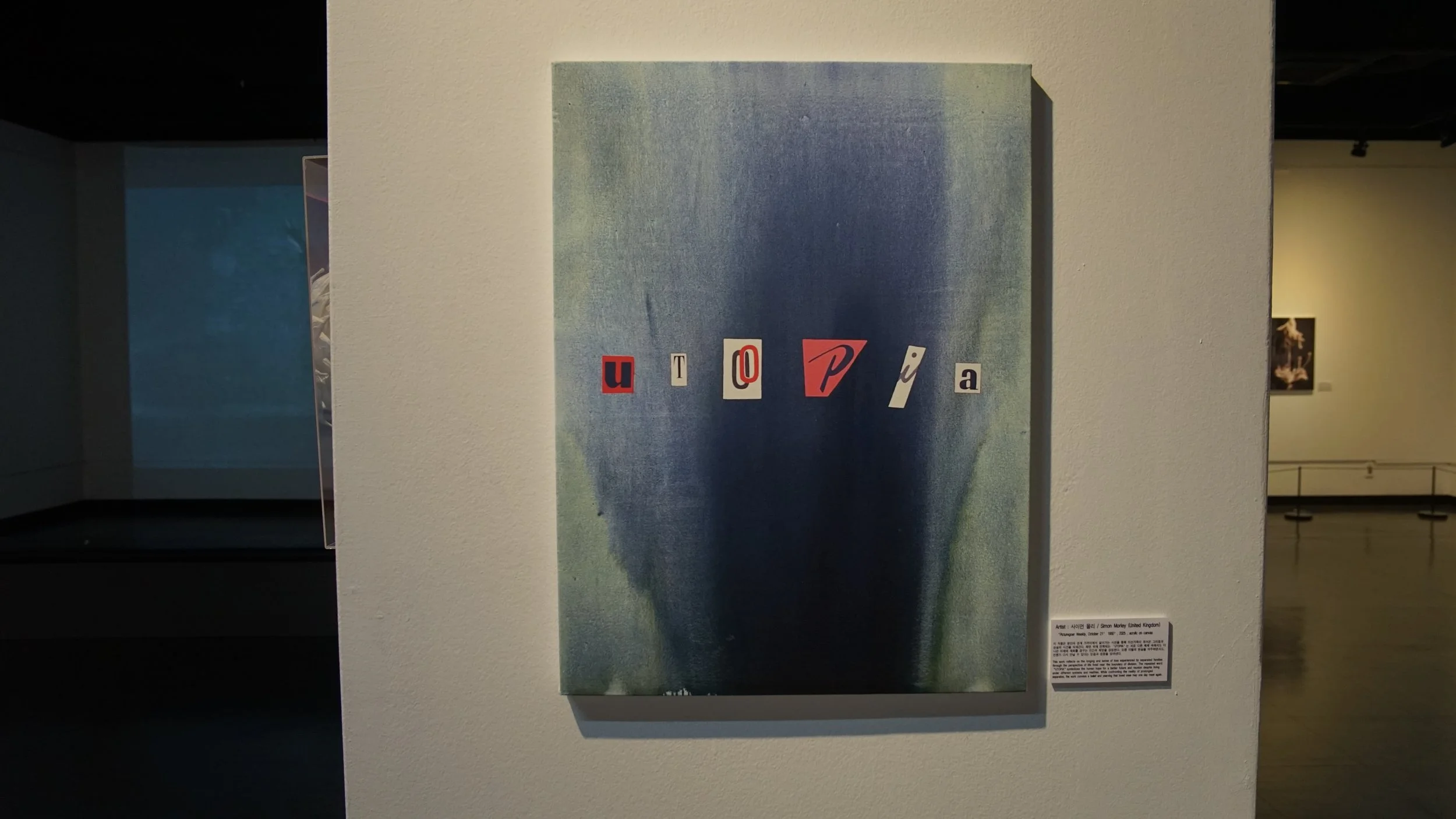
My painting in the exhibition, but displayed as a smaller digital print on canvas.
I suppose this trend to save money by printing digital copies is a sign that these days most paintings are seen digitally anyway. As a result, the actual size becomes irrelevant, as does the actual surface texture. Luckily, the work I submitted isn’t one in which I’ve actively built up the surface to encourage a tactile dimension, as with in my ‘Book-Paintings’ and ‘LP-Paintings.’ This work comes from a series in which I deliberately aim at flatness, and as a result, it translated remarkably well into a digital print. It’s part of a series in which I first cut letters from old magazines, and make a collage spelling the word UTOPIA, then use the collage as a sketch for painting a larger version on canvas, preserving the ‘collage’ effect. This particular work takes letters from the British magazine called Picturegoer Weekly, for October 21st, 1950. In other words, when the Korean War has recently begun, which seemed appropriate for this occasion.
I’ve made a whole series of paintings with letters derived from different magazines, on canvases of different sizes, and with different backgrounds. The cut-up letter typography is often called the ‘hostage letter’ style, which seems apt for a concept like Utopia. Here is another example, which has a flatter ground and uses letters originally cut from La Revue hebdomadaire, for 8th May, 1926. The dimensions are 73x91cm.
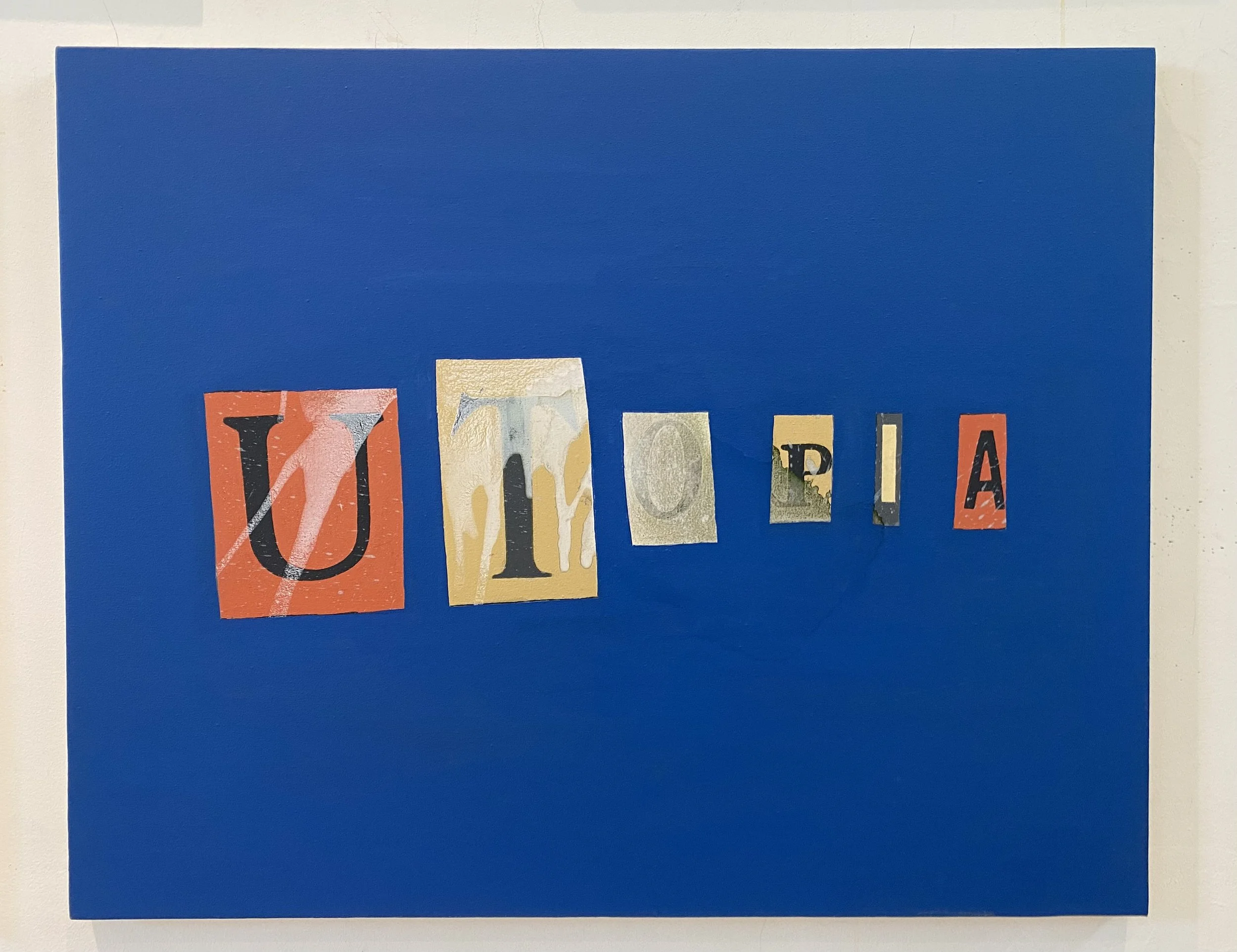
My painting, La Revue hebdomadaire, May 8th, 1926
I’ve also done a series of works on paper in which I blank out all the letters of a book page in gold paint, except the letters chosen to always spell the word UTOPIA. Here’s an example:
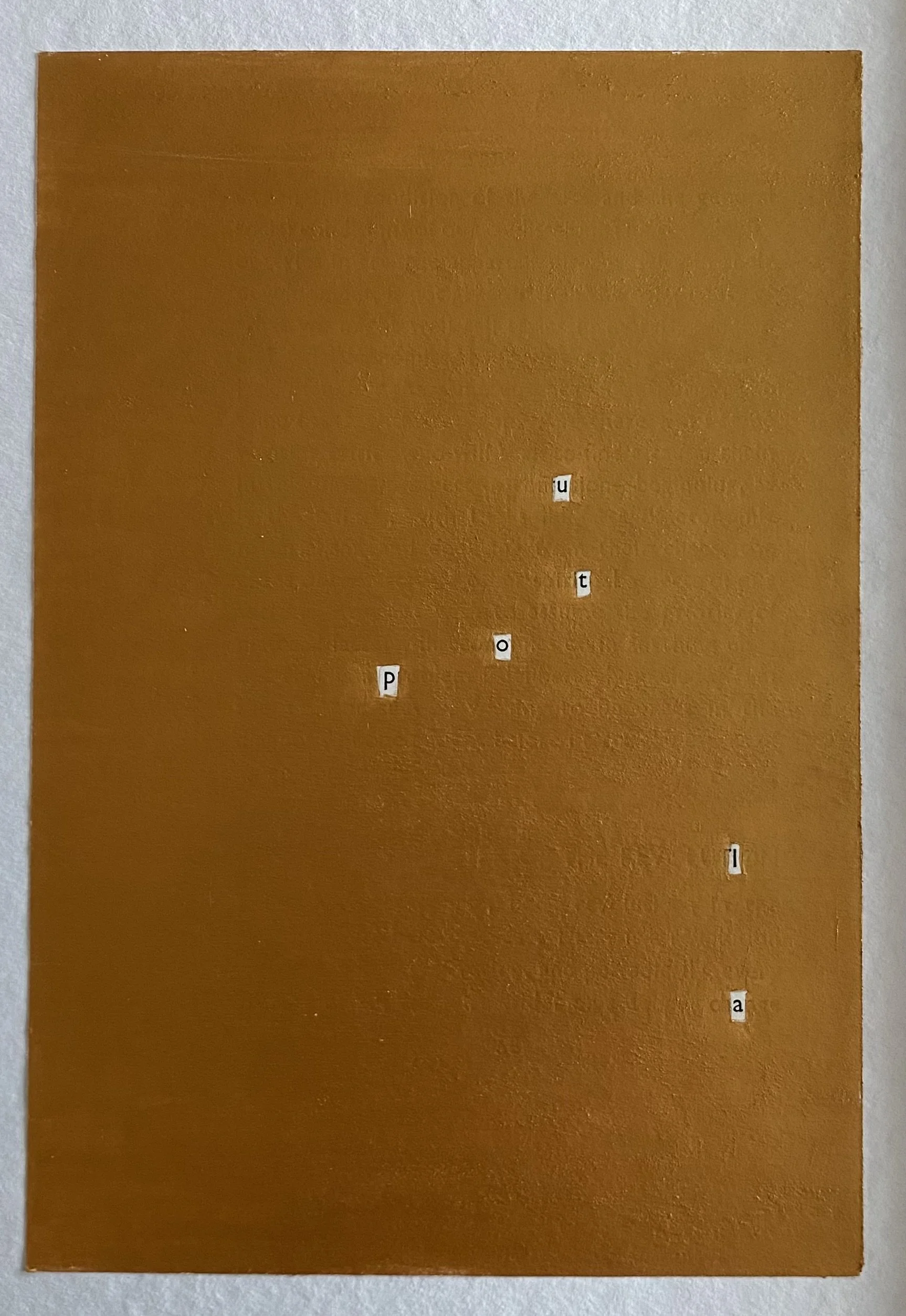
One of a series in which I paint out all the text on a book page, except letters to spell the word UTOPIA.
As several of my blog entries indicate, I’ve been interested in Utopia for a long time, and this interest has been sharpened by living so near a ‘failed Stalinist Utopia’, as one of the leading experts on North Korea, Andrei Lankov, puts it. My interest in the concept of Utopia opens outwards towards politics and ideology, and inwards towards art - especially Modernist art - as a Utopian activity. Obviously, the outside and the inside overlap.
The exhibition ‘73 Project: A Collective Prayer. Divided Time, Connected Future’ is at the Odusan Unification Observatory in Paju, South Korea, It opened on June 27 and runs until September 30, 2026.