JUST PUBLISHED! ‘La Belle France. British Artists Abroad from Walter Sickert to David Hockney.’
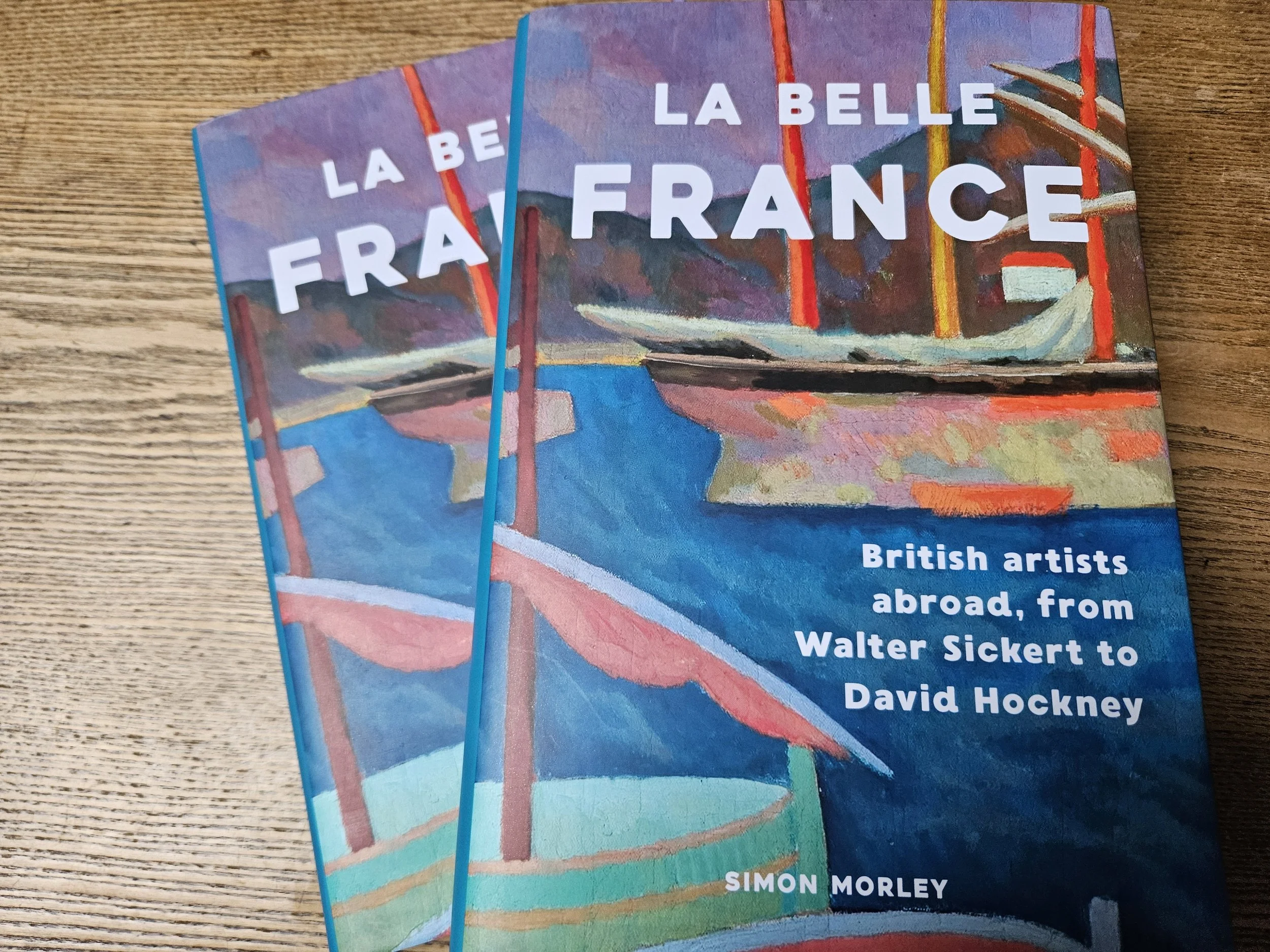
My new book has just been published by Yale University Press. It’s called La Belle France. British Artists Abroad, from Walter Sickert to David Hockney. Hatchard’s bookshops in London have made it their Non-Fiction Book-of-the-Month for June.
Here’s what the Yale Press Release says:
‘The late nineteenth to mid-twentieth century was the “golden age” of British artists living and working in France. They were attracted to Paris, home to renowned art academies, galleries, modern masters, and a liberating bohemian lifestyle. But many also travelled widely in France, whether on painting holidays in Normandy and Brittany, or, drawn by the Mediterranean climate, cheap properties and the relaxed hedonistic lifestyle in Provence and the Riviera.
Simon Morley explores the influence of French culture on British artists during the modern period, and from his house in central France travels in the footsteps of artists including Francis Bacon, the Bloomsbury Group, Edward Burra, Leonora Carrington, David Hockney, Gwen John, Ben Nicholson, and Walter Sickert. For these British Francophiles, France’s culture and social milieu were the most powerful expressions of the spirit of modernity and profoundly inspirational, helping to free them from what they perceived as the straitlaced parochialism of their homeland.
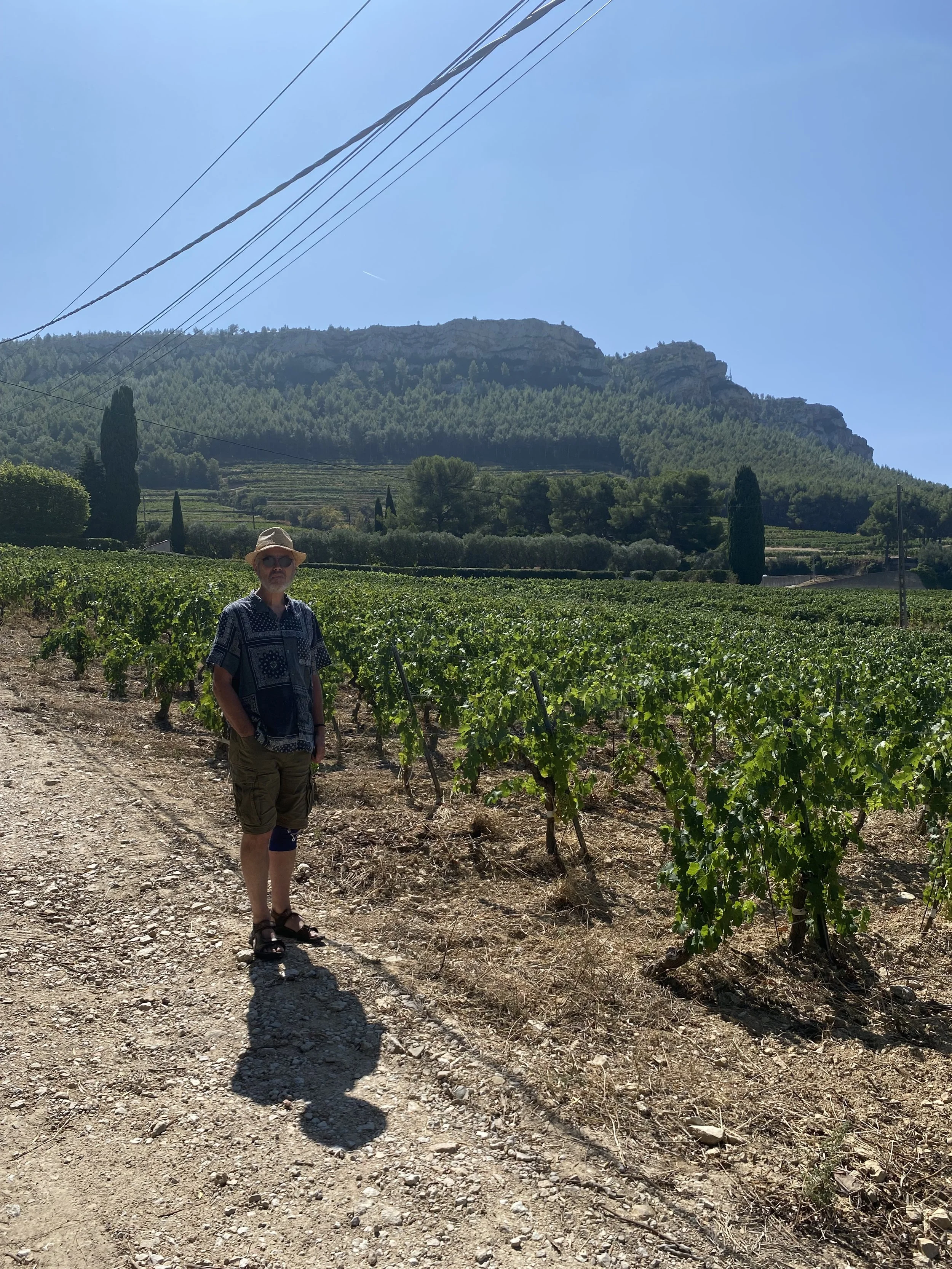
Me out searching for Vanessa Bell and Duncan Grant’s house near Cassis, which they dubbed ‘Bloomsbury-on-the-Mediterranean’. I couldn’t find the house, but it was fun looking for it..
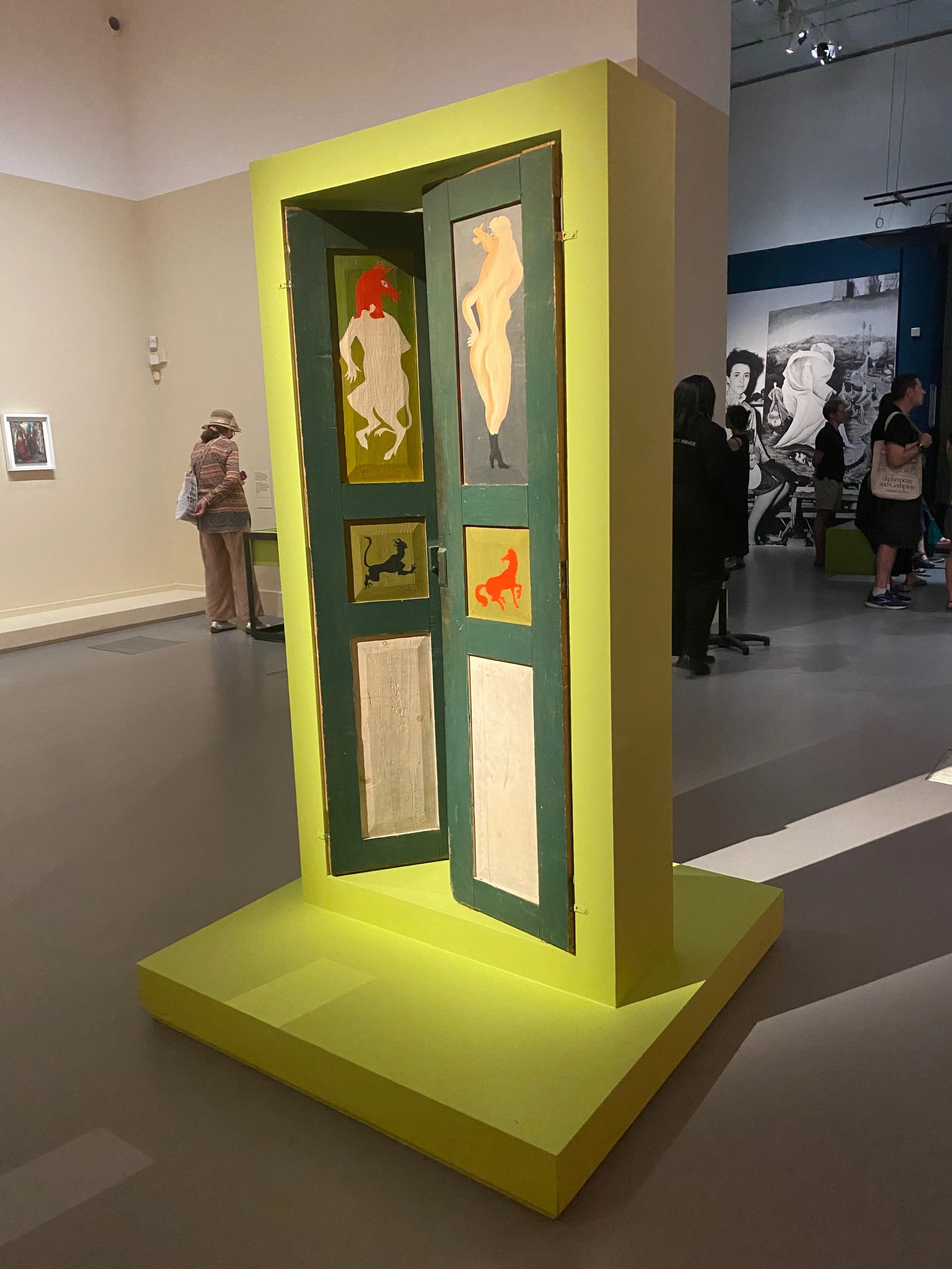
I’m in Paris writing this post, and yesterday I went to see the Leonora Carrington exhibition at he Musée du Luxembourg (until 19 July). As part of my research I visited the house in Saint-Martin-d’Ardèche where she lived briefly with Max Ernst in 1939/1940. Most of the work they made there has been removed, like these wardrobe doors painted by Carrington, which were in the exhibition.
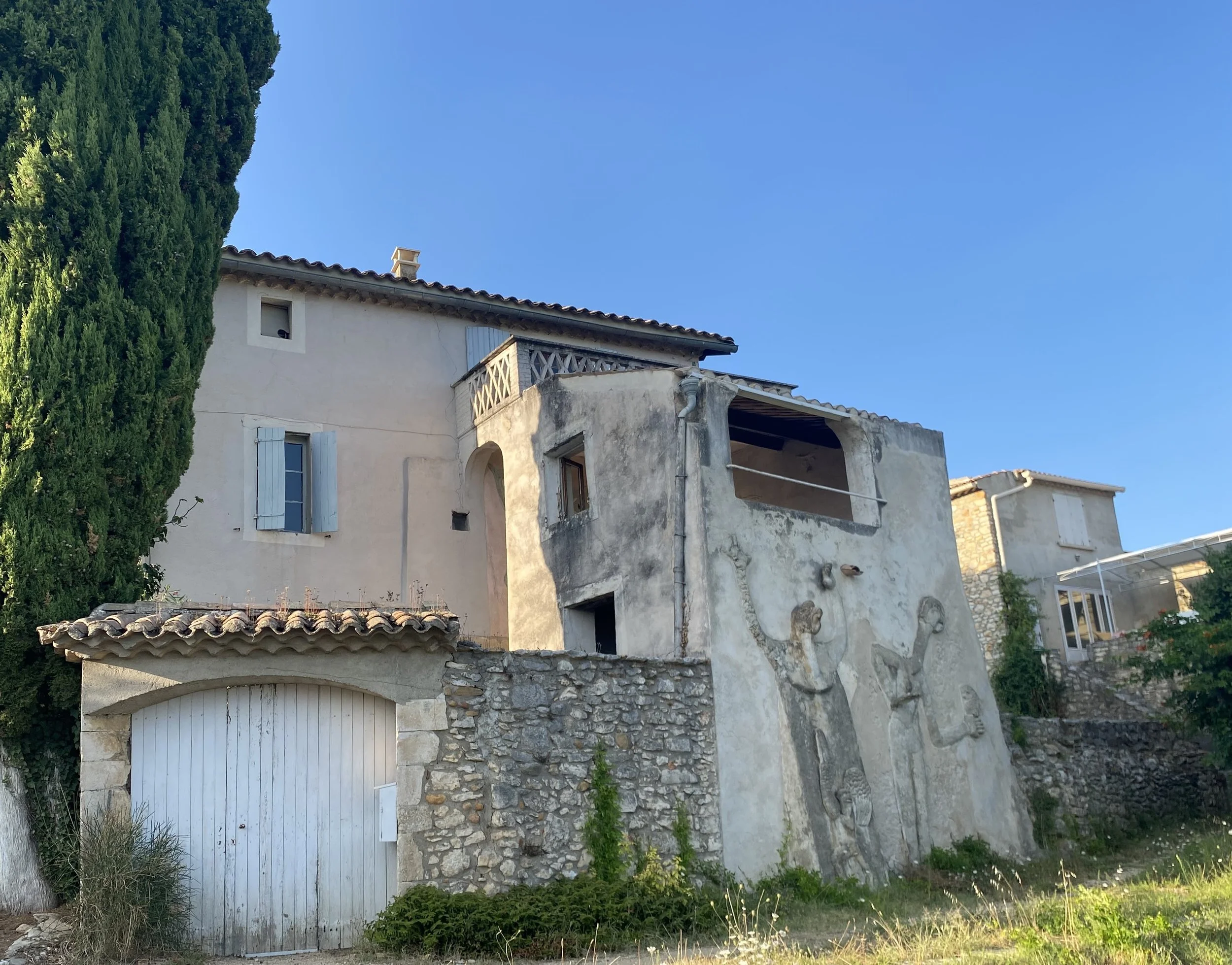
But it’s still possible to see the huge bas-reliefs made by Ernst on the outside walls:
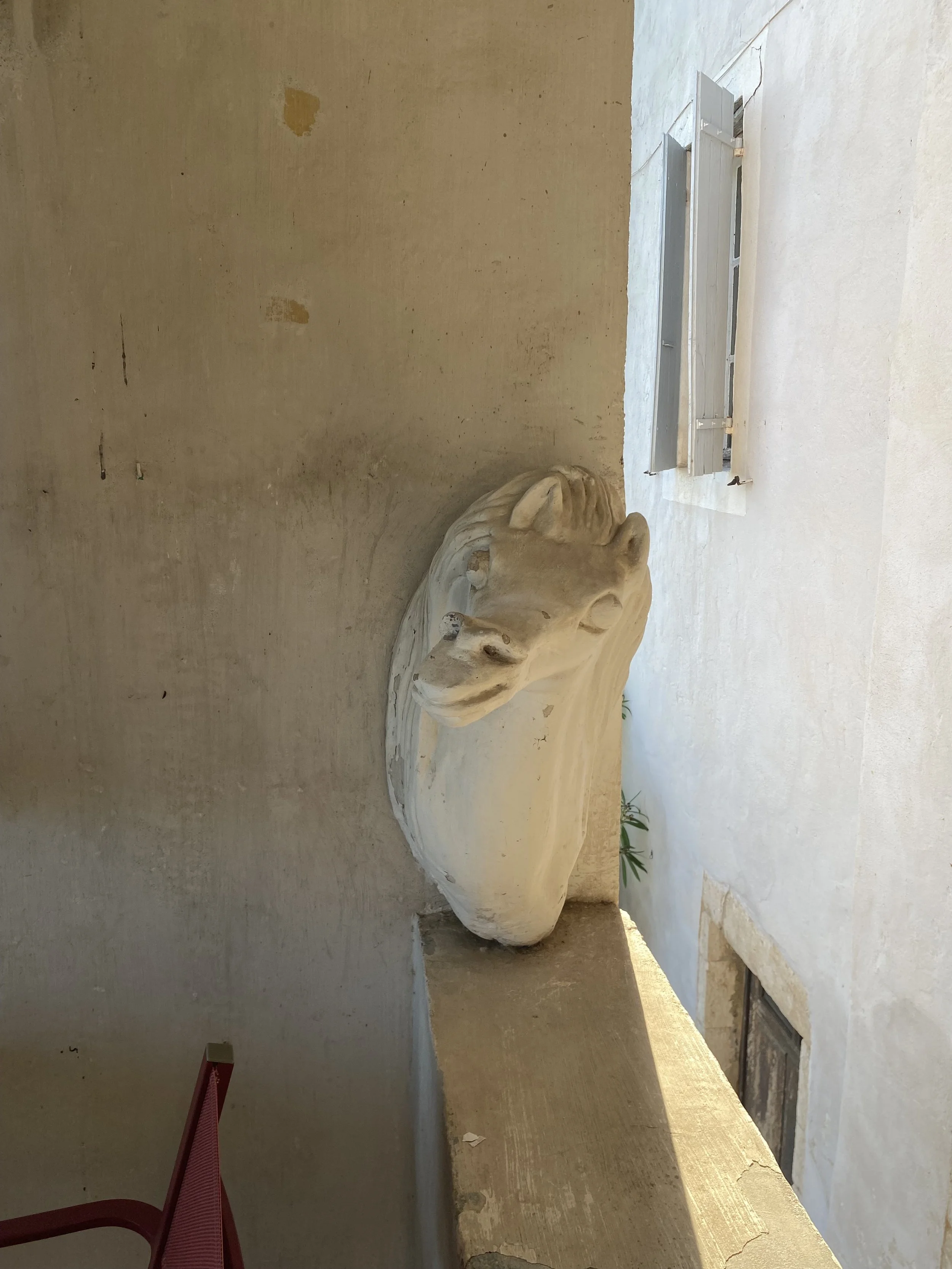
And this little sculpture of a horse’s head by Carrington:
*
I’m definitely a Brit abroad. I live most of the time in South Korea, but I still come to France regularly to stay in my house in the Allier. For me, personally, one of the reasons for writing the book was to think about why it was, back in the 1980s, I chose to move to Paris for a couple of years, and why in the early 2000s I brought a house in central France.
Ernest Hemingway famously wrote: If you are lucky enough to have lived in Paris as a young man, then wherever you go for the rest of your life, it stays with you, for Paris is a moveable feast.” And the Bloomsbury impresario Roger Fry declared about being in Provence: “It’s irresistible – life suddenly seems to have just twice its value.”
What is (or was) it about Paris and France?
I now realize that in my early twenties I adopted what were in the early twentieth century the characteristic tastes and prejudices of a progressive faction within the English upper middle class who embraced French culture as the epitome of progressive modernity, the home of the zeitgeist. By the time these Francophile tastes became available to me, they had filtered down to the broader middle class, from which I come, losing most of their radicalism in the process. I see now that it was going to Oxford, where I studied Modern History, that imbued me with this particular mindset, or ‘habitus’, as the French sociologist Pierre Bourdieu calls it. But I was also adopting a hopelessly outdated ‘habitus’, because by 1982 when I arrived in Paris the city was no longer the custodian of the modern cultural zeitgeist, which is what I see, in retrospect, I was searching for. That role had several decades before been seized by New York.
But living in Paris for two years, teaching English to earn a living and starting to paint in earnest, was still a wonderful experience, and while I was there I decided to move next to New York, where I lived for three years. But that’s another story.
As for the French countryside…… The association of the south with avant-garde art has long ago faded away. Today, only very rich artists like Tracey Emin (who has a domain in Le Lavandou in Provence) can, or would even want to, inhabit a Mediterranean coast that is mostly overrun by tourists and ruined by property developments. Elsewhere in France, there are now regions where villages have more British inhabitants than French (for example, in the Dordogne). Where I live in the north of the Allier, is near the dead centre of the country and is still genuinely la France profonde. No famous artists are associated with the region.There aren’t many other Brits who live here; most of the few foreigners are Dutch. Down the road from my village is the largest oak forest in Western Europe, the beautiful Forêt de Tronçais.
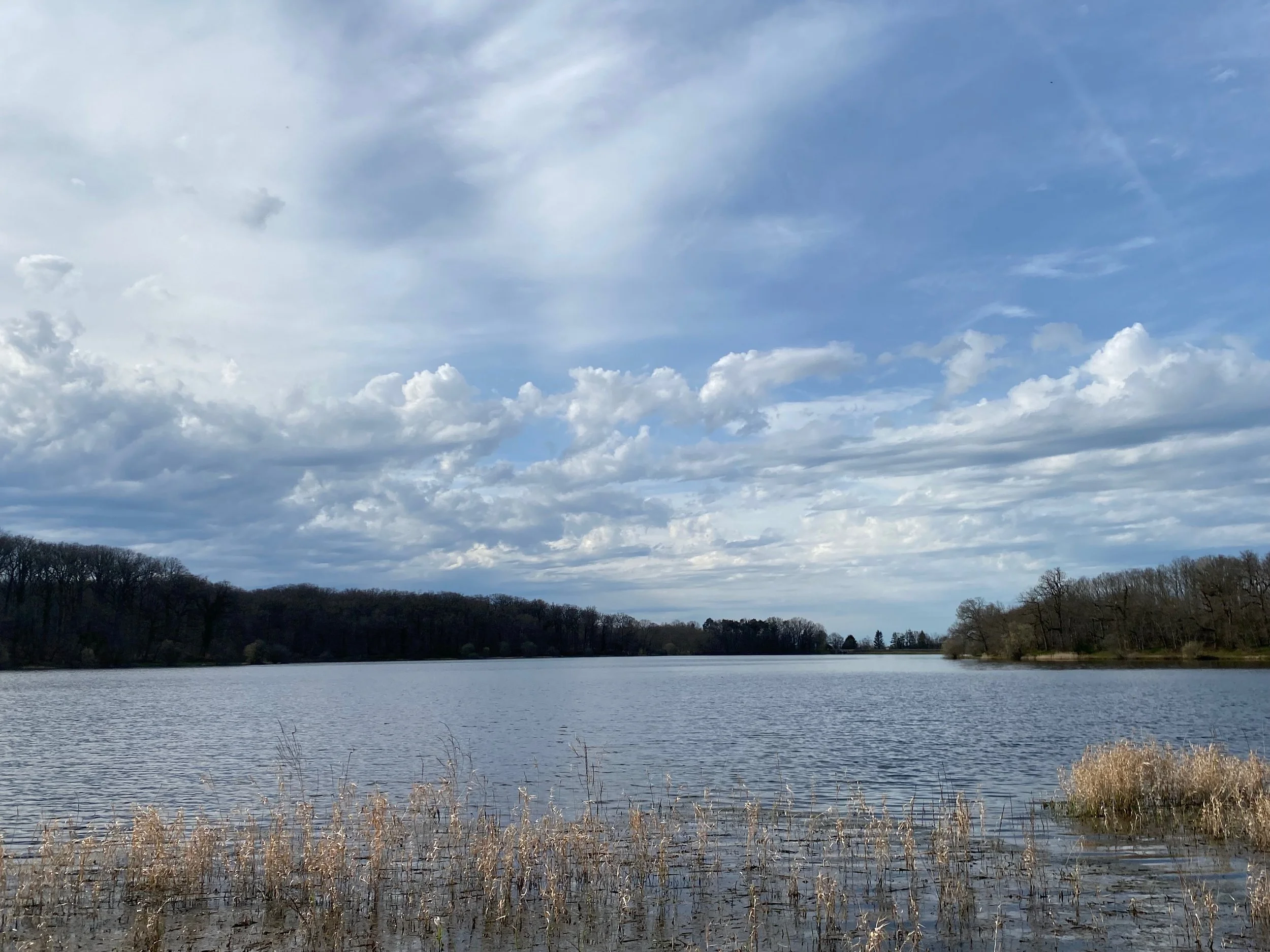
The Etang de Pirot, in the Forêt de Tronçais.
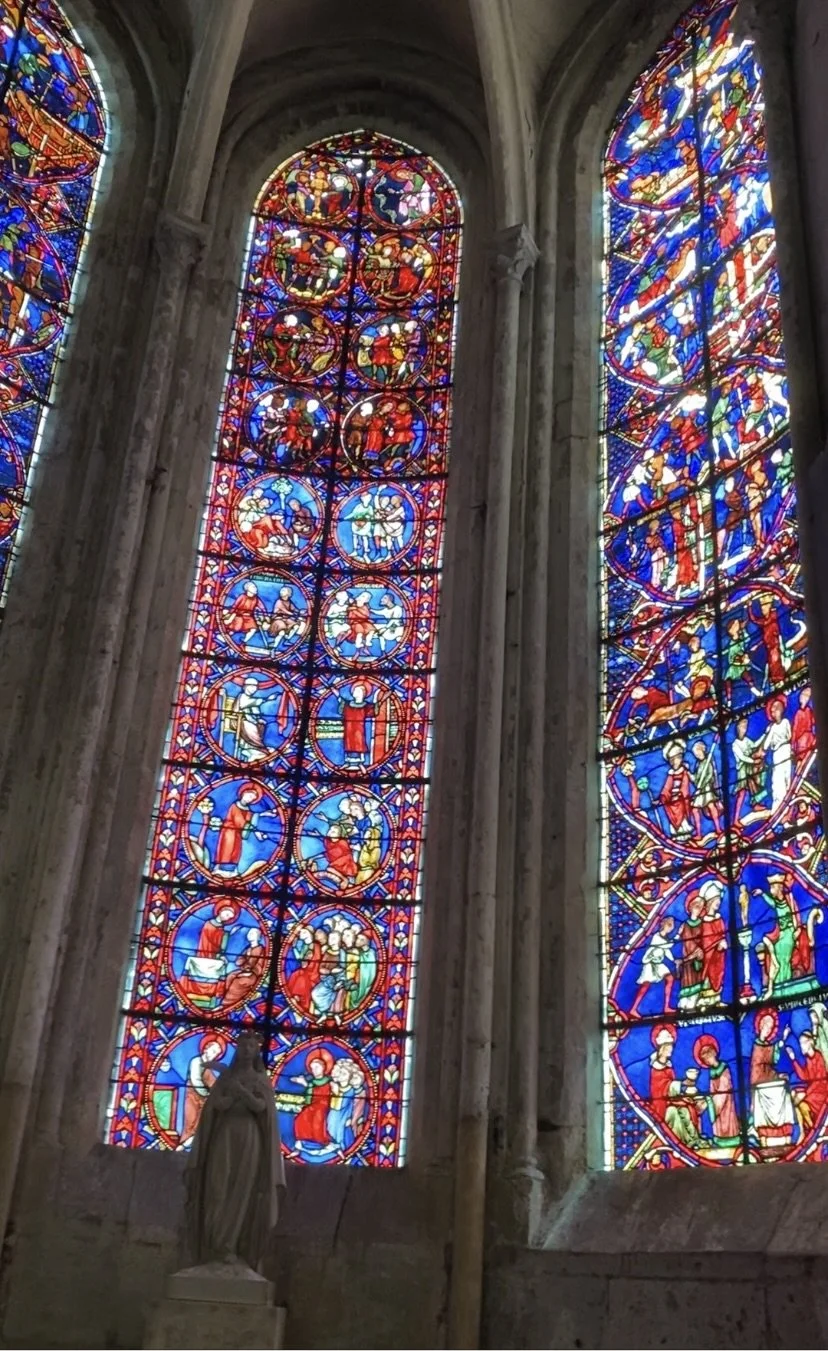
Up the road in Bourges Cathedral there are the most sublime stained-glass windows in the world.
A good bottle of wine from the local Intermarché costs 10 Euros. Yes. I know, The same old clichés. But I’m happy to be able to enjoy them!
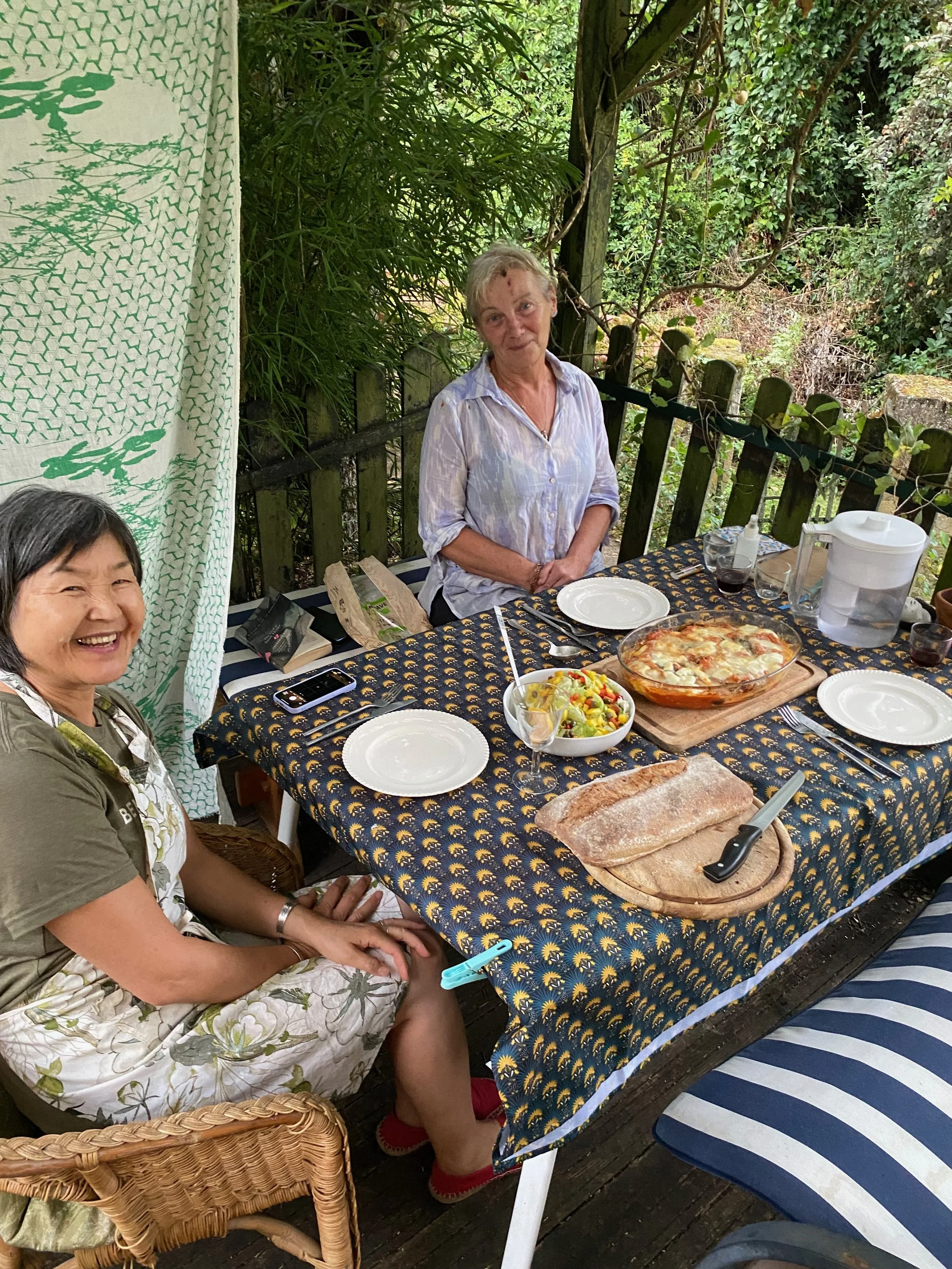
My wife, Eungbok, and my sister, Kate, co-owner of our house, enjoying dinner under the pergola.